ExiwikBrowse manufacturers โ†’

Raj Specialities Surfactants

๐Ÿญ industrial๐Ÿ“ India
Connect

About Raj Specialities Surfactants

Specialty surfactants can be categorized based on various factors such as chemical structure, function, source (synthetic or natural), and application. Common types include nonionic, anionic, cationic, and amphoteric surfactants. With years of experience and a commitment to excellence, we have established ourselves as a trusted name in the foundry chemical business. Surfactants, or surface-active agents, are compounds that lower the surface tension between two phases (usually liquid-liquid, liquid-gas, or liquid-solid interfaces), aiding in the dispersion, emulsification, wetting, foaming, and other surface-related properties. Specialty surfactants offer enhanced functionalities or are designed for particular industrial or consumer needs.

Products

Enamel Paint Thinner
industrial

Packaging Size 20 L Brand RAJ SPECIALITIES SURFACTANTS Usage/Application Epoxy Packaging Type Can Thinner Type Turpentine Density .895 Origin Synthetic Country of Origin Made in India enamel thinner paint purpose turpentine Virgin solvents such as Xylene, White Spirit, Cellulose Thinners and Acetone. Standard and Gun Wash is also available for cleaning and thinning of 2K coatings

Nc Paint Thinner
Nc Paint Thinner
industrial

Packaging Size 20 L Usage/Application Industrial Brand Raj Physical State Liquid Packaging Type Can Thinner Type Turpentine Grade Standard Technical Grade NC PAINT Nc Thinner is a professional-grade, high-performance solution that is widely used to thin lacquer paints, automotive paints, and wood polishers. It helps to break down the thick properties of varnishes, paints, lacquers, etc

Stainless Steel Passivation Chemicals
industrial

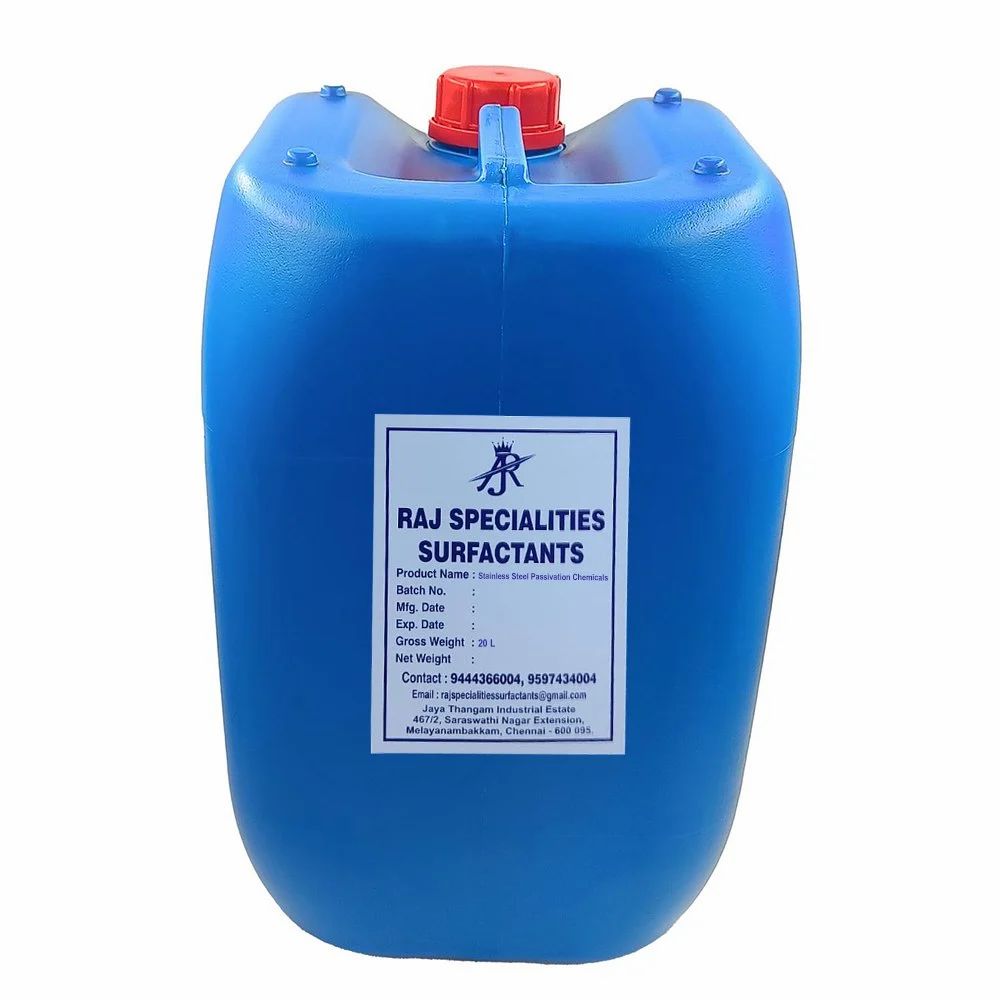
Grade Standard Technical Grade Physical State Liquid Packaging Size 20L Packaging Type Can Usage/Application Finishing Process To Prevent Corrosion Manufactured By Raj Specialities Surfactants In stainless steel, the passivation process uses nitric acid or citric acid to remove free iron from the surface. The chemical treatment leads to a protective oxide layer, or passivation film, that is less likely to chemically react with air and cause corrosion. Passivated stainless steel resists rust.